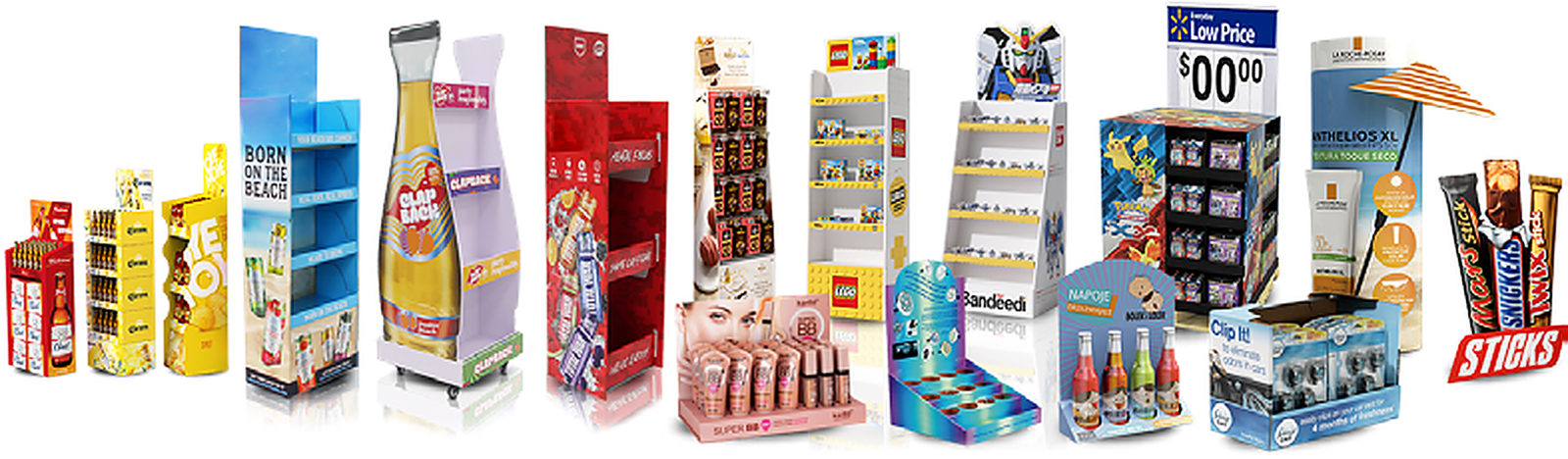
Choosing a retail display is easier when you start with where the product will sit, how shoppers will pick it up, and how store staff will set it up. This guide compares the main types of custom cardboard display stands and shows what to prepare before requesting a design or quote.
What is a cardboard retail display?
A cardboard retail display is a printed structure that holds and presents products in a store. You may also see the terms POP display (point of purchase) and POS display (point of sale). These terms describe the merchandising role; the right physical format depends on the available space, product weight, pack size and retailer rules.
Choose the display format by placement
Floor display stands
A cardboard floor display is a freestanding unit placed in an aisle, promotional area or other approved floor space. It can use shelves, trays, hooks or a bin. Choose this format when you need more product capacity or a taller branded presentation. Confirm the retailer’s footprint and height limits before fixing the structure.
Countertop and PDQ displays
A countertop display box uses a small surface near checkout or on a service counter. A PDQ display is designed for quick placement; some versions also serve as the shipping tray. Both work well for compact products, but the opening, product orientation and replenishment method should be tested with the actual packs.
Shelf-ready packaging
Shelf-ready packaging carries products to the store and becomes a display tray after an outer section is removed or folded away. It is useful when the product already has a shelf location. Ask how the tray opens, whether the front lip hides key label information, and how it looks when half empty.
Sidekick, pegboard and pallet displays
A sidekick or powerwing uses narrow vertical space beside another fixture. A pegboard display presents hanging packs on hooks. A pallet display groups a larger volume of stock for a planned promotion. These formats need especially clear information about store placement, pack dimensions and the total loaded weight.
For a closer look at fast-set-up shelf and counter units, read our PDQ display box guide.
Five checks before approving a display design
- Placement: Get the retailer’s allowed width, depth, height and access requirements.
- Product load: Record the dimensions and weight of each pack, the number of facings and the maximum filled weight.
- Shopping experience: Make sure the first and last products are easy to see and remove.
- Assembly: Decide whether the display arrives flat packed, partly assembled or prefilled; test the setup steps.
- Graphics: Put the product name and main message where shoppers can see them from the expected approach.
A physical prototype helps reveal issues that a flat artwork file cannot: shelf sag, awkward access, unstable feet, difficult folding and graphics hidden by products. Test it with the real merchandise before production approval.
What to include in a display brief
Send your supplier the product size and weight, quantity per display, intended store location, target dimensions, artwork or brand guidelines, expected order quantity, delivery destination and desired pack-out method. If a retailer has a specification sheet, include that too. These details make the first design and quotation more useful.
See Lnnook display examples
Explore our product center for floor displays, countertop displays, PDQ trays, shelf-ready packaging and other retail display formats. If you have a product and placement in mind, contact Lnnook with the brief above to discuss a custom design.
Frequently asked questions
What is the difference between a floor display and a PDQ display?
A floor display stands on the store floor and usually provides a larger presentation area. A PDQ display is designed for fast store placement and is often a smaller tray or counter unit. The final choice depends on the retailer’s space and the product load.
Can a cardboard display be shipped flat?
Many cardboard displays can be designed for flat packing, but the best pack-out depends on the structure and whether products are loaded before shipping. Confirm assembly steps and carton dimensions during the prototype stage.

PDQ Display Boxes: A Practical Guide for Retail Packaging – Lnnook
[…] for display examples. If you are still choosing between a PDQ tray and a larger unit, read our cardboard display stand guide. To discuss a specific product, contact Lnnook with your […]